
The Growth of Peer Mentoring in Wisconsin
Peer mentoring is helping adults with intellectual and developmental disabilities build confidence, community, and independence across Wisconsin. It’s a model rooted in lived experience where individuals who have navigated similar challenges support others on their journeys. Through training and personal connection, peer mentors help mentees set goals, develop self-advocacy skills, and take steps toward greater independence. The results can be life-changing, opening doors to new opportunities in employment, community involvement, and personal growth.
Two of Inclusa Foundation’s inaugural grantees, Aptiv Inc. and Opportunities Development Center (ODC), are driving change by expanding Wisconsin’s peer mentoring opportunities. Since launching their programs, Aptiv and ODC have demonstrated how powerful peer mentorship can be when lived experience leads the way.
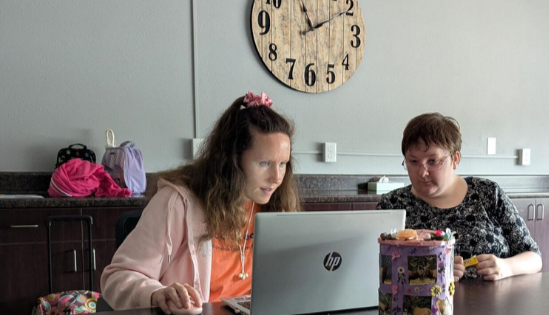
Peer Mentor Ashley, working with Peer Mentee Breanna
ODC’s team of mentors including Ashley, Priscilla, and Dylan, bring a wide range of talents and experiences to their work. Ashley, who has a background in communications, has used her skills to help advocates share their stories with legislators and educate how the right funding can support others in gaining independence. Another mentor, Priscilla, leads virtual art sessions that combine creativity with community building, while Dylan helps train new mentors and guide their professional development. Together, ODC’s mentors supported 17 individuals in year-one and are on track to double that number by the end of year-two of their grant award.
Aptiv’s peer mentoring program has also seen strong progress, with one certified peer mentor and four others working toward completing their internship. Aptiv has been able to expand their programming into Dane County and Rock County with their newest mentor, Hunter. This has been a huge milestone as expanding into these service areas has doubled their number of participants. Their mentors provide individualized support that complements existing services like job coaching and independent living programs. One mentor shared how their mentee, who had previously attended a structured youth program, began showing more self-awareness and confidence after just a few sessions. Through these one-on-one connections, mentors help mentees recognize their own strengths, problem-solve, and build independence.
Both organizations are working toward a shared goal: building a sustainable structure for peer mentoring across Wisconsin. They collaborate closely with the Wisconsin Board for People with Developmental Disabilities (BPDD) and the Department of Health Services (DHS) to explore pathways for peer mentoring to become a reimbursable service under the state’s long-term care program. Their efforts include creating new training models, like ODC’s six-week “Self-Advocacy at Work” course, hosting educational events, and presenting at conferences to raise awareness among other providers and care teams.
This partnership has also sparked new ideas beyond mentorship itself. Aptiv, ODC, and the Down Syndrome Association of Wisconsin recently formed a Human Rights Committee that brings together professionals, and community members to review cases and ensure that individual rights are respected in service settings. It’s another example of how these organizations are turning learning into leadership, helping to shift Wisconsin’s disability services toward greater equity and inclusion.
As Aptiv and ODC move into the next phase of their projects, they’re not only expanding peer mentoring but also helping to build a framework for others to follow. Their work is demonstrating what’s possible when people with lived experience are supported to lead, transforming systems, strengthening communities, and redefining what inclusive support can look like in Wisconsin.
To learn more about Peer Mentoring or to partner with these organizations please visit the following websites: