

Redefining support for those
who make it all possible
Inclusa Foundation is a new grantmaking organization dedicated to enhancing the lives of people with disabilities and older adults in the State of Wisconsin. The Foundation was formed using the proceeds from the sale of assets of Inclusa, Inc. – a nonprofit Medicaid Managed Care Organization with decades of long-term care experience, supporting the Family Care program. While the Foundation is an independent entity with no ties to any current Managed Care Organization, our mission to build diverse and inclusive communities continues through our available grant opportunities.
—
—
Inclusa Foundation operates within the Commonunity® framework, the philosophy through which Inclusa, Inc. approached its work. Emphasizing choice, home, contribution, accessibility, and belonging, Commonunity® guides the approach to enhancing full citizenship for all. Through this lens, Inclusa Foundation will work to evolve how Long-Term Services and Supports (LTSS) are delivered and managed over time, including:
Expanding access to competitive integrated employment,
Transitioning toward independent community living and other non-congregate approaches, and
Exploring value-based purchasing to ensure that service-delivery yields tangible results for people with disabilities and older adults.
Grant Opportunities
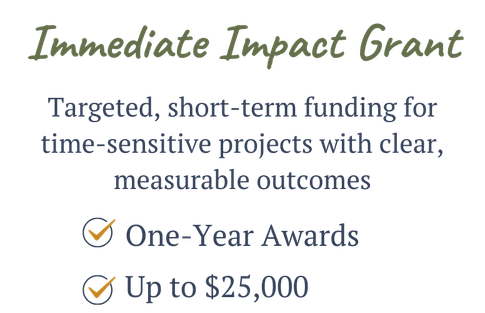
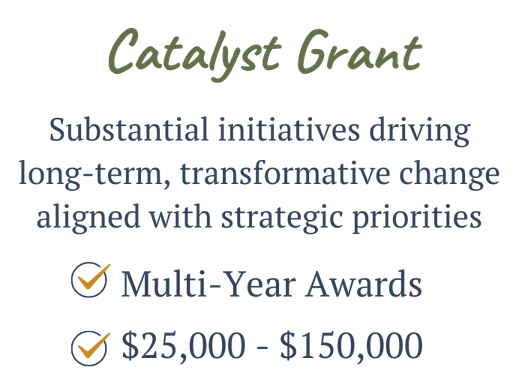
Inclusa Foundation invests in bold ideas that advance innovative, inclusive solutions for older adults and people of all abilities across Wisconsin.
Through our grant pathways, we partner with nonprofits and state agencies to move beyond short-term pressures, strengthening leadership, testing new approaches, and scaling solutions that build resilient, sustainable systems of care.
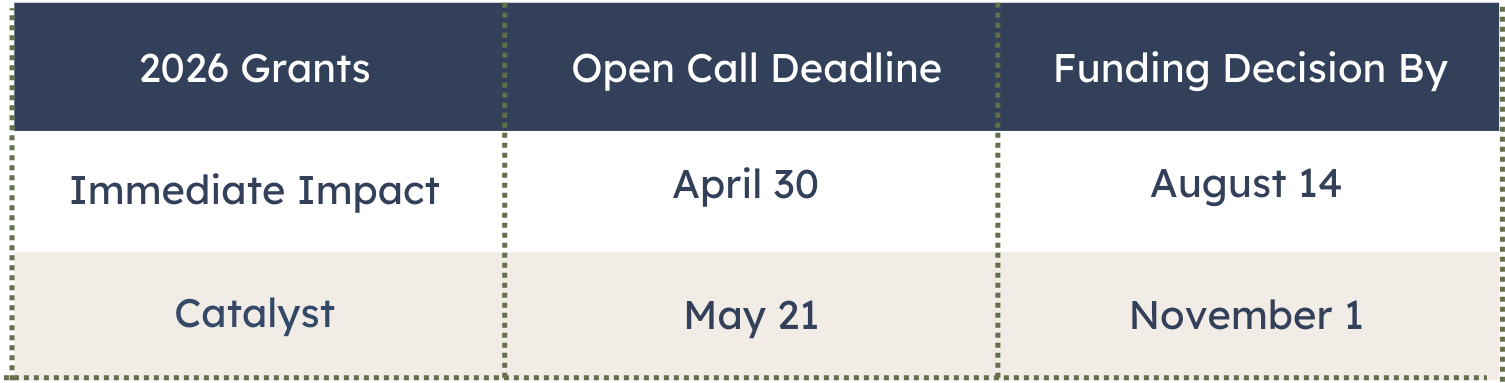
Grant Process Timetable
The Open Call for both grant pathways will begin on April 1, 2026
What We Fund
Inclusa Foundation supports organizations advancing innovative, scalable solutions that strengthen Wisconsin’s long-term services and supports. We welcome proposals from 501(c)(3) organizations or other tax-exempt entities as designated by the Internal Revenue Service (IRS).
Across all areas, we prioritize initiatives that strengthen leadership and governance, expand workforce and employment pathways, increase access to services, better integrate medical and long-term care, and improve lasting sustainability. The examples below are illustrative, not exhaustive. We are especially interested in ideas related to housing, community living, integrated employment, workforce development, peer support, and systems-level transformation.
Our investments generally fall within three interconnected areas:
-
We support efforts that pilot, evaluate, or scale transformative models that expand community living, integrated employment, workforce quality, and sustainable service delivery. Examples may include:
Expanding access to community-based and non-congregate living options
Increasing competitive integrated employment, especially for individuals with complex needs
Strengthening workforce retention and quality in home- and community-based services
Testing value-based or risk-sharing approaches across providers and payers
Scaling validated models with long-term public funding potential
Supporting pilot programs, new service models, or approaches to care and independence
Building the organizational capacity needed to launch, or expand innovative programs, including investments in infrastructure, evaluation, and technology
Projects that pilot new or emerging models may receive separate funding for independent evaluation. Applicants do not need to include evaluation costs in their proposed budget. -
We invest in building strong, future-focused leaders who can drive systems change. This may include:
Training programs for self-advocates and family members
Leadership development for provider organizations
Fellowship or internship programs connected to public policy and systems change
Partnerships that bring proven national leadership models to Wisconsin
Cross-sector collaborations and initiatives that improve how systems work together
Capacity investments that allow organizations to participate in or lead collaborative efforts, such as coordination roles or partnership infrastructure
-
We support work that strengthens transparency, research, and informed policymaking in Wisconsin’s long-term services and supports system. This may include:
Educating policymakers and the public on disability and aging policy
Rigorous analysis of public policy impacts
Data collection and monitoring initiatives that increase accountability and transparency
Research, evaluation and dissemination of promising practices
Capacity building that strengthens data, evaluation or learning systems
What We Do Not Fund
The Foundation does not support any of the following activities:
Lobbying
Grants to individuals, including individual scholarships
Biomedical research
Capital campaigns or endowments
Programs for the purpose of religious education
Financial deficits or debt reduction
Activities that are duplicative of Family Care, IRIS or other available public funding streams
Local fundraising campaigns unconnected to a specific project or activity
Grant FAQ

-
Inclusa Foundation is an independent grantmaking organization seeking to support innovation and leadership in disability and aging services, with particular focus on the State of Wisconsin. Inclusa Foundation was formed with the proceeds of the sale of the assets of Inclusa Inc., a nonprofit Medicaid Managed Care Organization in Wisconsin’s Family Care program.
-
No. The Foundation is an independent entity with no ties to any Managed Care Organization or other external entity. Our grantmaking is wholly separate and independent.
-
The Foundation is interested in grant proposals that support the development of high-quality services for people with disabilities and older adults in Wisconsin. We have a particular interest in proposals that pilot and evaluate innovative program models for supporting the inclusion of people with disabilities and older adults in the community. We are also open to proposals in other areas, including leadership development programming, public policy education, and support for self-advocate and family-led activities. In general, we see our role as supporting targeted investments in the health of Wisconsin’s long-term services and supports ecosystem, rather than providing indefinite support for services that are also supported by public payers.
-
Applicants must have a 501(c)(3) or other nonprofit tax-exempt status as designated by the Internal Revenue Service (IRS).
Organizations currently receiving a grant from Inclusa Foundation are not eligible to apply for new funding within the same calendar year. This ensures that we can support a diverse range of initiatives and can extend our impact across different projects. Awarded organizations are welcome to apply again in the year following the conclusion of the funding award.
-
At the present time, the Foundation does not accept unsolicited applications for general operating support. At the discretion of the Board, we may choose to provide grants for this purpose after the Foundation has developed a relationship with a grantee over a longer period of time after supporting specific projects.
-
The Foundation is open to both short-term (1 year) or long-term (2-3 year) grant proposals. Longer-term grant proposals should include specific budget projections for each year the program would be in operation. Long-term projects are most likely to be supported when an initiative requires a longer duration to demonstrate effectiveness and impact. Otherwise, the Foundation will also consider proposals in consecutive years to renew funding for a successful project.

-
Inclusa Foundation is actively evaluating the needs of Wisconsin’s LTSS sector to ensure a thoughtful, strategic approach to our 2025 grant opportunities.
Updates will be shared as soon as more details become available.
-
The Foundation welcomes pre-submission inquiries. You can e-mail us at info@inclusafoundation.org.
-
At the present time, the Foundation is primarily considering proposals within the State of Wisconsin or that will have a substantial impact on Wisconsin’s long-term services and supports ecosystem. Successful proposals must demonstrate a clear relationship between project activities and outcomes for people with disabilities and older adults residing in the State of Wisconsin.
-
The Foundation does not support any of the following activities:
• Lobbying
• Grants to individuals, including individual scholarships
• Biomedical research
• Capital campaigns or endowments
• Programs for the purpose of religious education
• Financial deficits or debt reduction
• Activities that are duplicative of Family Care, IRIS or other available public funding streams
-
Inclusa Foundation values grantees’ time, and views reporting as a collaborative process. Check-ins and reporting provide opportunities to celebrate progress, address challenges, and explore additional support. Grantees are asked to complete:
Initial Check-in (within first three months): Confirms project launch and identifies early successes or challenges.
Mid-Year/Mid-Project Report and Check-in (for grants over $50,000): Assesses progress, key achievements, and project challenges.
Year-End/Final Report and Check-in: Reflects on project outcomes and impact, systems change contributions, and budget expenditures.
While the reporting process is housed in the grant management platform, the Foundation is open to other reporting formats that better support the grantee and their work.
-
Organizations currently receiving a grant from Inclusa Foundation are not eligible to apply for new funding within the same calendar year. This ensures that we can support a diverse range of initiatives and can extend our impact across different projects. Awarded organizations are welcome to apply again in the year following the conclusion of the funding award.